April the first might be thought of for its practical jokes, but the creation of a now $3.5 trillion company 50 years ago in a Californian garage is no joke.
It was on this day that Steve Jobs and Steve Wozniak incorporated Apple Computer Inc.
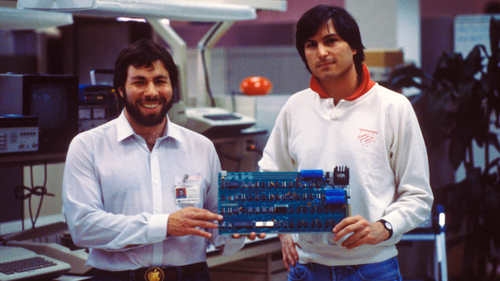 It was on this day that Steve Jobs and Steve Wozniak incorporated Apple Computer Inc. (Apple)
Created as a hand-assembled circuit board computer, the first Apple Computer was a favourite with hobbyists with its simple design and ability to be expanded as the user wanted.
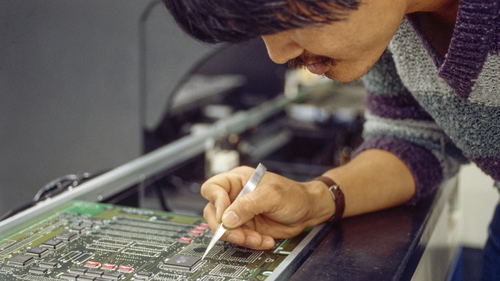 The first Apple Computer was a favourite with hobbyists. (Apple)
1977 - The Apple II - The company's bread and butter
Vastly more professional, the Apple II was the first fully assembled computer to bring colour graphics and easy-to-use software into the home, as well as becoming a staple in schools and smaller businesses.
Until the Apple II computers were entirely niche or seen only in large businesses.
This was effectively the start of the personal computer revolution, sparking a competitive race for the personal computer from IBM and a software war with Microsoft.
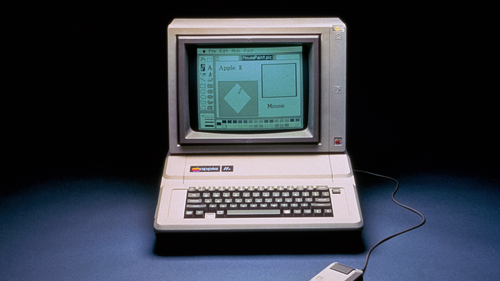 Until the Apple II computers were entirely niche or seen only in large businesses. (Apple)
The Apple II, then follow-ups through the IIe and more, became the base for the business of Apple, making Steve Jobs one of the richest men in the world.
But Jobs had other things on his mind.
The Macintosh would bring a revolution once again, the simple idea of "point and click" with a mouse and a graphical user interface.
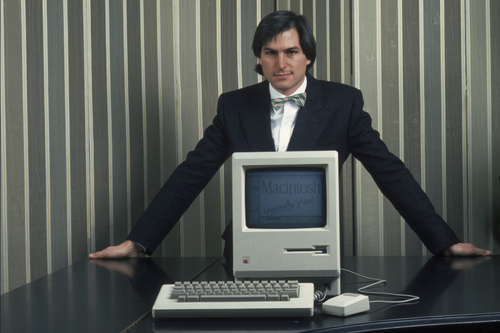 The Macintosh would bring a revolution once again. (Apple)
No complex coding, no type to play; this was a whole new way of operating a computer - something that lives long today and inspired the Microsoft "Windows" operating system.
Behind the Macintosh was a fundamental belief in using computers to inspire creativity and connection.
The company's famous "1984" Super Bowl ad teased the product before its launch.
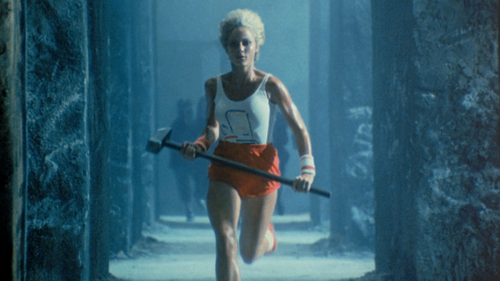 The company's famous "1984" Super Bowl ad teased the product before its launch. (Apple)
1985 - Apple without Steve Jobs
Despite being a revolution, the Macintosh was hard to sell due to its price tag, add to that a battle between Jobs and then CEO John Sculley and the board; Jobs eventually resigned and created his own new computer brand, NeXT.
Revenue came when the company introduced lower-cost Macintosh versions, as well as the intrusion of the PowerBook laptop.
Despite their increase in sales, the company faced far more market competition and attempted to experiment with a range of new products from digital cameras, audio products, and even an early tablet called the Newton.
The demise of the company continued until a return to its origins.
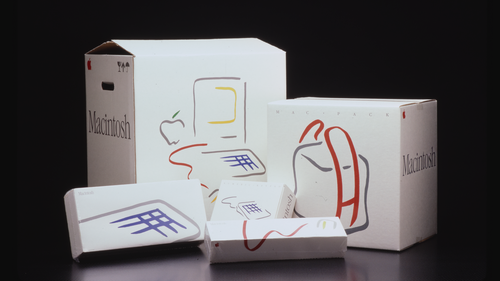 The MacIntosh inspired the Microsoft "Windows" operating system. (Apple)
1997 - Steve Jobs is back
Jobs had a vision; he used that to rekindle innovation, and the business turnaround from this point is nothing short of remarkable.
What looked like a computer monitor was something very different.
An all-in-one computer with translucent backing made in a range of colours, including the original "Bondi Blue", said to have been named for the colour of the water at Sydney's Bondi Beach.
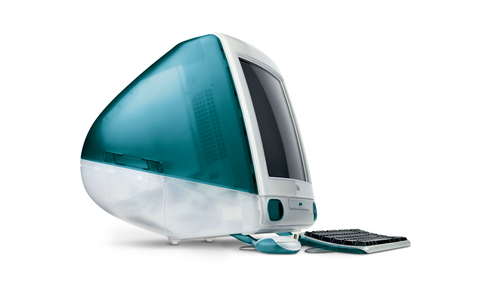 The original "Bondi Blue" iMac. (Apple)
Vastly different to the beige computers from every other company, the iMac was easy to use and "quick to get online."
It also ditched the floppy drive and relied on USB connections.
The iMac evolved over many generations and still exists today as a thin, all-in-one computer in a range of colours, a clear nod to the original.
2001 - More than Computers - the iPod
Portable music players existed already.
We called them MP3 players.
But the iPod changed how it was done, both in design and user interface.
Advertised to the masses as a way to carry "1000 songs in your pocket," the iPod did to music players what the Macintosh did to computers, making them easy to use and accessible.
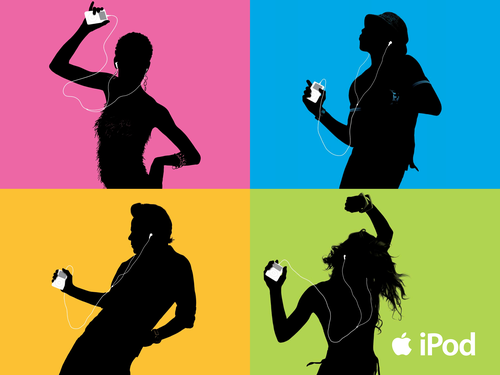 The iPod changed how portable music players were done, both in design and user interface. (Apple)
2003 - Changing the Music Industry with iTunes
For the first two years of the iPod, customers used iTunes to "rip" their own CD collection into digital form and play it on the go.
But then, the iTunes Music Store made it possible to buy songs and albums online, legally.
In a time of Napster and illegal music downloads, this helped the music industry find a new path forward in the digital age.
Of course, over time, that also led to streaming music on Spotify, which Apple countered with Apple Music.
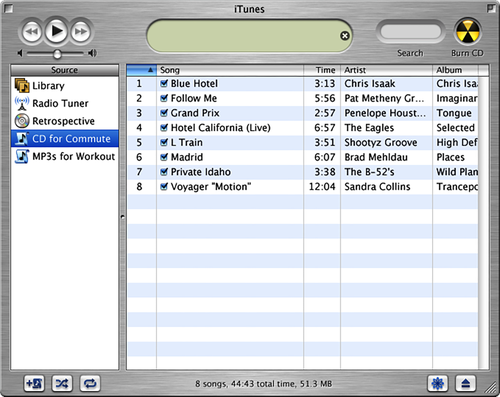 The iTunes Music Store made it possible to buy songs and albums online legally. (Apple)
2007 - Crushing BlackBerry with the iPhone
Anyone close to tech will never forget the phrase "An iPod, a Phone, an Internet Communicator" as Steve Jobs introduced the first iPhone.
Things we take for granted today, like pinching the screen to zoom in and out, swiping up and down, or just having the whole world at our fingertips, began this.
This began the demise of the then-popular BlackBerry, which was the first true smartphone, but they were unable to compete with Apple's full-screen display.
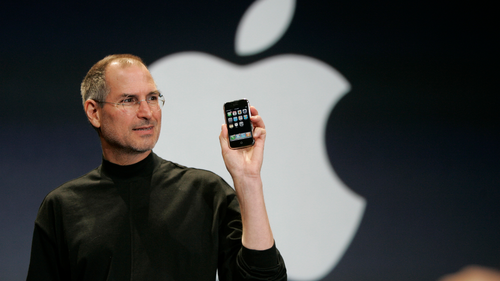 Steve Jobs introduces the first iPhone. (Apple)
The true power of the Apple iPhone and subsequent new products is the software, and much of that is not the brainchild of Apple, but instead, independent developers all around the world.
Apps have been created that no one would have ever dreamt of, even Steve Jobs.
We now order food and cars to pick us up on our phone, people meet the love of their lives on apps, and apps are used to create wonderful images and content too.
The multi-billion-dollar economy that was created as a result of the App Store simply didn't exist beforehand.
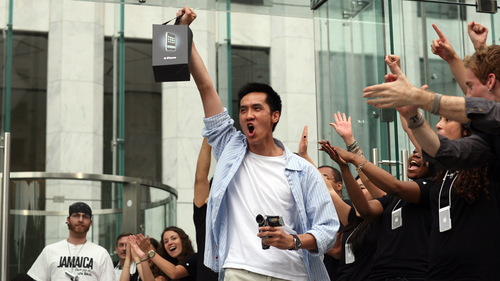 iPhones have become a popular option with tech consumers. (Supplied)
Taking that touch-screen to a new level, the iPad brought computing to a new level of portability.
Empowered by that same App Store which drove the iPhone, the iPad replaced laptops for some, and became a new way to consume content across millions of homes.
It's even used by pilots replacing thick and heavy books in the cockpit.
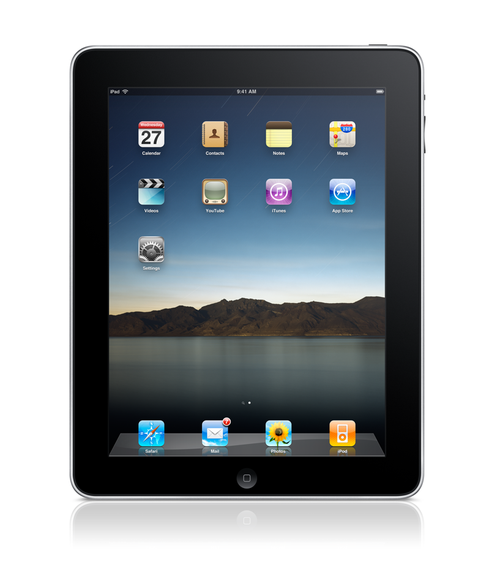 The iPad brought computing to a new level of portability. (Apple)
2011 - The end of a legacy
Steve Jobs battled a rare form of pancreatic cancer for some time, before losing that battle in 2011.
He chose Tim Cook to take over as CEO, and Cook continues in that role today.
At the heart of almost every decision that's made at Apple has Steve Job's legacy at its core, something the company and its leadership is never ashamed to admit.
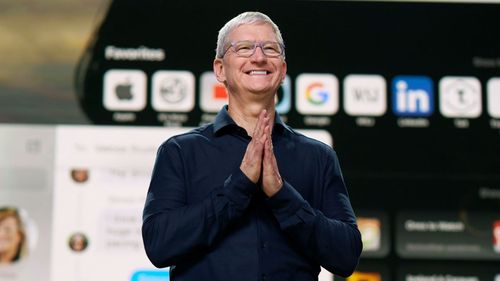 Tim Cook joined Apple in 1998 and served in a variety of senior roles before assuming his current position. (AP)
2014 - Tap your phone to pay
Apple Pay was a slow launch for the company, battling banks here in Australia and stubborn retailers in the US.
But today, it's inspired a simple new generation of payments.
Now available on iPhone and Apple Watch wherever you go, and even on Macs and iPads for online payments, it's a secure new way to process payments.
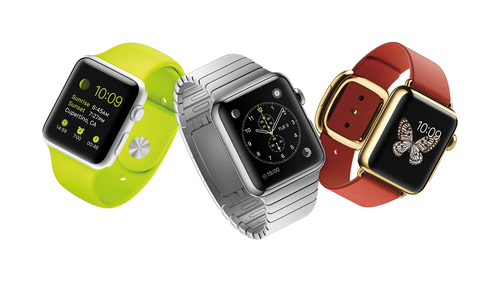 The Apple Watch was introduced in 2014. (Apple)
It was also 2014 when the Apple Watch was introduced, bringing a new level of fitness tracking and notification access to users.
That device today does so much more, from SOS emergency alerts to high-level health monitoring, including a medically certified ECG.
Bluetooth headphones are the norm today, but 10 years ago, Apple's first version drew attention for its design and ease of connectivity.
Today, they have some of the best noise cancellation on the market and can be used to perform live translations and even act as Hearing-Aids.
Many wouldn't know what Apple Silicon is - but most of us know what Intel is.
In 2020, Apple began to phase out the use of Intel processors in their computers in favour of chips they designed and manufactured themselves.
Today, that gives them some of the most efficient and high-performance computers on the market, desktop and portable.
A device you wear on your head, blocking out the world around you to see a whole new world of computing.
Apple calls it spatial computing.
Still in search of a use, it's likely this is a precursor to Apple's likely move into wearable computing, such as sunglasses, as several other companies have done, but only time will tell.
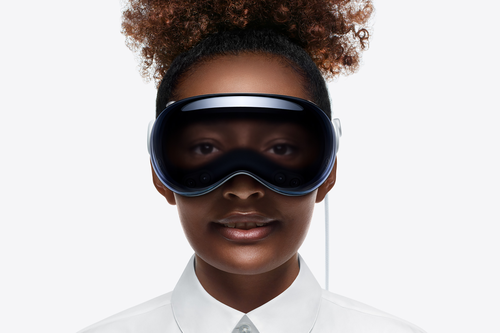 Apple describes its Vision Pro as spatial computing. (Apple)
Imagine earning $100 billion annually without selling a product? That's the revenue Apple makes from Services.
Services refer to subscriptions to Apple Music, Apple TV, and sales on the App Store.
This is also the year Apple went low cost with their Mac computers for the first time - the MacBook Neo is a remarkable product at a low $899 price that is already proving successful for Apple. At the same time, Apple appears to be lagging behind in the "AI Revolution".
Their Apple Intelligence offers a secure way to perform basic tasks but does not compete with the Google, OpenAI, or Microsoft offerings. Whether that's a good or bad thing for their long-term business, we'll not know for a while.
What we do know is that as a $3.5 trillion dollar business, they are here for the long term and maintain a strong, even enviable level of desirability in the market across all their products.
NEVER MISS A STORY: Get your breaking news and exclusive stories first by following us across all platforms.